Tucked into the limestone terrain of Perlis, Gua Kelam unfolds slowly. Light thins, the air cools, and sound settles into something dense and ancient. This is not a cave shaped for drama or spectacle. It is a working landscape, preserved with restraint, where geology and human labour still sit close to the surface.
Known locally as the Cave of Darkness, Gua Kelam consists of two connected sections, Gua Kelam 1 and Gua Kelam 2. Together, they form a short but resonant passage through Malaysia’s mining history, one that can still be walked today with clarity and care.
Read also: Gua Charas, Kuantan: A Hidden Temple Cave in Pahang
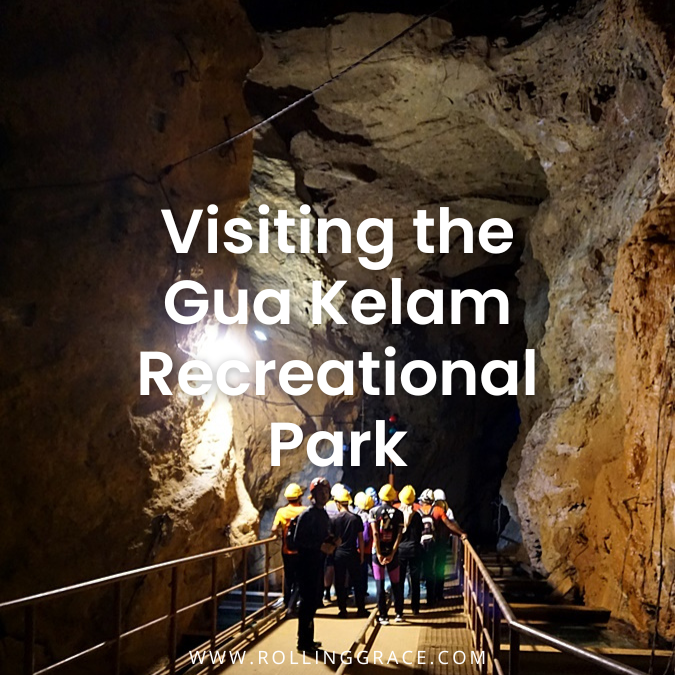
History of Gua Kelam and Tin Mining in Kaki Bukit
Located approximately 33 kilometres north of Kangar, Gua Kelam stretches about 370 metres through the limestone of the Banjaran Nakawan range. Its present form was shaped during the tin mining era of the early twentieth century.
In 1935, British mining operations used the cave’s natural waterway to transport tin ore discovered beneath Kaki Bukit. The interior was once lit by carbide lamps, and the darkness within the cave gave rise to its name. Unlike many historical sites that have been heavily reconstructed, Gua Kelam has retained much of its original working character, with mining remnants left largely intact.


Gua Kelam 1 vs Gua Kelam 2: What Is the Difference
Gua Kelam 1
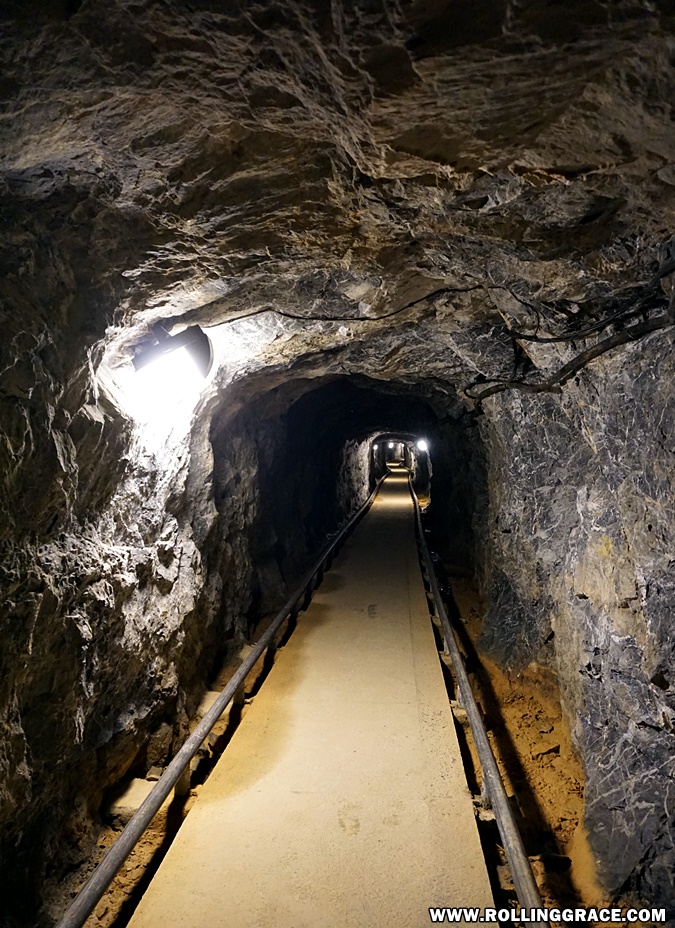
Gua Kelam 1 is the main public cave and the most commonly visited section. It features a wooden walkway that runs through the cave, making it accessible to most visitors. The route is dry, well defined, and does not require specialised equipment. Mining remnants such as trolley tracks, tools, and wall inscriptions are visible along the way. Helmets are required due to low ceilings in certain areas.
Gua Kelam 2
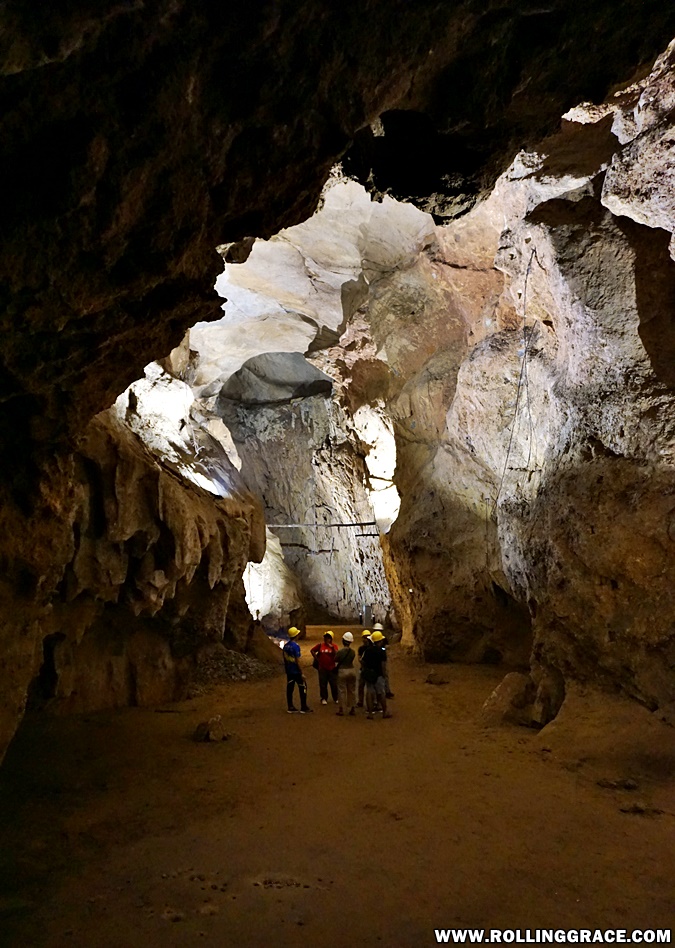
Gua Kelam 2 is a guided section that includes more restricted areas of the cave. Access is only allowed with an official guide and is typically arranged as a group tour. This section involves steeper terrain and may include additional physical effort depending on the selected route. Gua Kelam 2 is less developed than Gua Kelam 1 and is intended for visitors seeking a deeper exploration of the cave rather than a general walk-through.



What to Expect When Visiting Gua Kelam
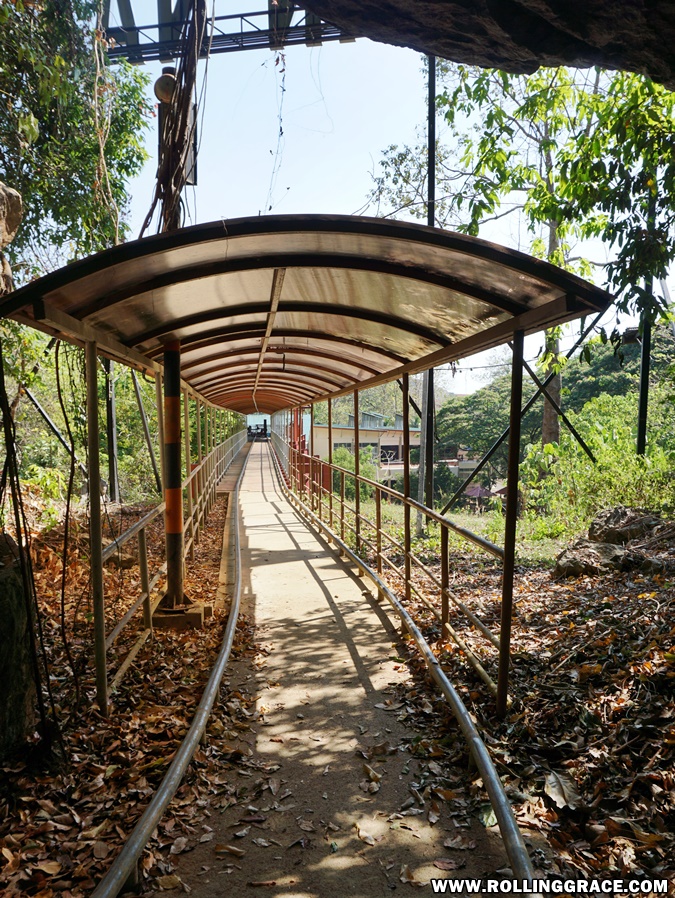
The visit begins at Kaki Bukit, where a forestry office stands near the entrance. Inside, a wooden walkway leads through the length of the cave, allowing visitors to move steadily without technical equipment. The standard route is dry throughout and does not require headlamps. Aside from a few short staircases, there is minimal climbing involved.
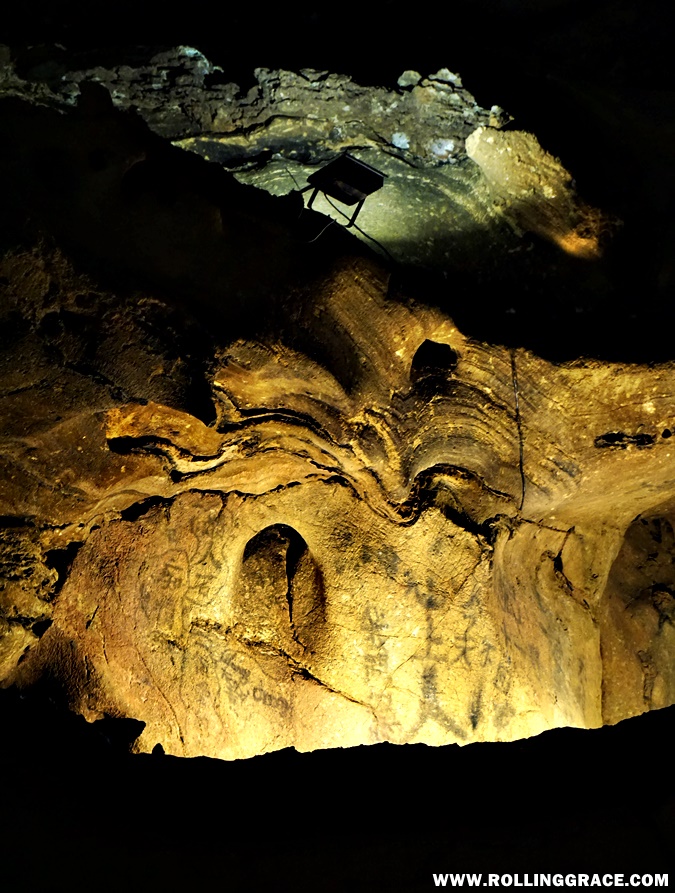
What defines the experience is not difficulty, but attentiveness. Rusted trolley tracks run along the floor, once used to move ore through the cave. Old tools remain where they were left. On the limestone walls, charcoal inscriptions written by Chinese miners are still visible. Many speak of longing, love, and the desire to return home. These markings are fragile and unguarded, made powerful by their quiet persistence.
Protective helmets are required, as sections of the ceiling dip low. Guided tours are strongly recommended. The cave is large, and the guides provide measured, detailed explanations of its history, formations, and artefacts, allowing the space to be understood rather than simply passed through.


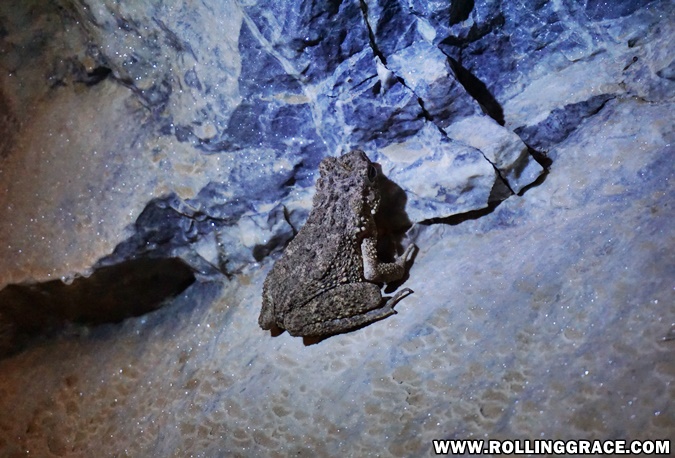
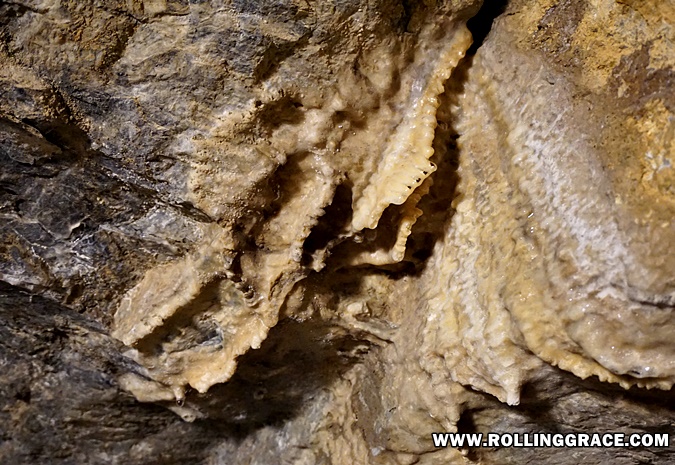
Hidden Features Inside Gua Kelam Cave
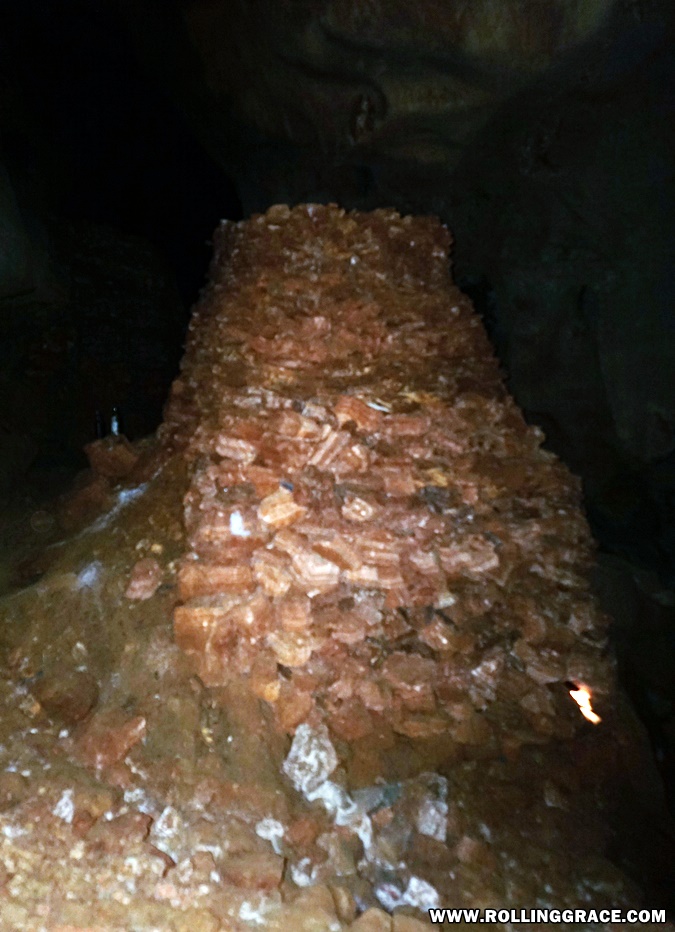
Roughly halfway into the cave, a short but steep climb leads to a lesser known chamber. The ascent is brief, but the atmosphere shifts immediately upon reaching the top. This smaller cave contains several cairns, carefully stacked piles of stone arranged with clear intention.
There is no official interpretation displayed, and the structures are left undisturbed by local authorities. Based on historical context and traditional Chinese practices, these cairns are believed by some to be burial sites for miners who died while working in the cave. Nearby ritual spaces suggest prayer and offering practices once took place here. The chamber is silent, and the absence of explanation gives the space its gravity.



Activities Around Gua Kelam
Exiting Gua Kelam, visitors emerge into a landscaped park beside a calm lake, a gentle contrast to the enclosed darkness inside. Additional activities are available in the surrounding area, including rock climbing routes, a flying fox, and a 3D gallery that presents themes of local flora, fauna, mining history, caves, and rainforest ecosystems.
These attractions sit alongside the cave rather than defining it. Gua Kelam itself remains the core experience.
Camping is permitted at the nearby Hujan Hujan campsite, which offers basic facilities. The site also serves as the starting and finishing point for the annual Gua Kelam Nature Run, a marathon that passes through former mining trails, farmland, limestone caves, and forested areas.


Entrance Fees and Opening Hours
- Address: KM 2, Jalan Kaki Bukit, 01000 Kangar, Perlis
- Opening hours: 9.00am to 6.00pm
- Contact number: Perlis Forestry Office: +604 938 4466, +6012 455 2121
Entrance fees
Gua Kelam 1
Adults RM3 with MyKad, RM5 without
Children RM1 with MyKad, RM3 without
Gua Kelam 2 Guided Tour
RM80 per group, maximum of 10 visitors
Gua Kelam 3D Gallery
Adults RM3 with MyKad, RM5 without
Children RM2 with MyKad, RM3 without
Best Time to Visit Gua Kelam, Perlis
Gua Kelam is open year round and can be visited in most weather conditions, as the main cave route is sheltered and dry. The best time to visit is during the morning or early afternoon, when temperatures are cooler and visibility inside the cave is clearer.
Weekdays are generally quieter than weekends and public holidays. During school holidays, visitor numbers may increase, especially for Gua Kelam 1. The cave remains cool inside, but surrounding outdoor areas can be hot during midday, particularly in the dry season.
Travel Tips for Visiting Gua Kelam
Certain sections of the cave are narrow, with low ceilings and delicate limestone formations that take decades to form. Visitors are advised to move carefully and avoid touching the walls. Past vandalism has left visible damage near the exit, a reminder that preservation relies on restraint and respect.
Gua Kelam does not ask to be rushed through or consumed quickly. Its value lies in what remains undisturbed. Tools abandoned where labour once paused. Words etched into stone by men far from home. Pathways shaped by repetition and endurance.
To walk through Gua Kelam is to encounter a place shaped equally by geology and human effort. It does not demand admiration. It rewards attention.


How to Get to Gua Kelam from Kangar
Gua Kelam is located in Kaki Bukit, approximately 33 kilometres north of Kangar.
By car
From Kangar, drive towards Padang Besar via the Changlun–Kuala Perlis highway. Follow signboards to Kaki Bukit and Gua Kelam. The drive takes around 40 minutes, depending on traffic. Parking is available near the entrance.
By public transport
From Kangar Bus Terminal, take a bus heading to Kaki Bukit. From the bus stop, it is about a 10 minute walk to the Gua Kelam entrance and ticket office.
Love stories like this? Subscribe to the Rolling Grace newsletter for thoughtful travel notes, hidden dining gems, and slow discoveries from across Asia.
Leave a Reply