Dataran Tsunami Kota Kuala Muda sits along Kedah’s northern coastline, marking the exact stretch of shore where the 26 December 2004 Indian Ocean tsunami reached Malaysian ground.
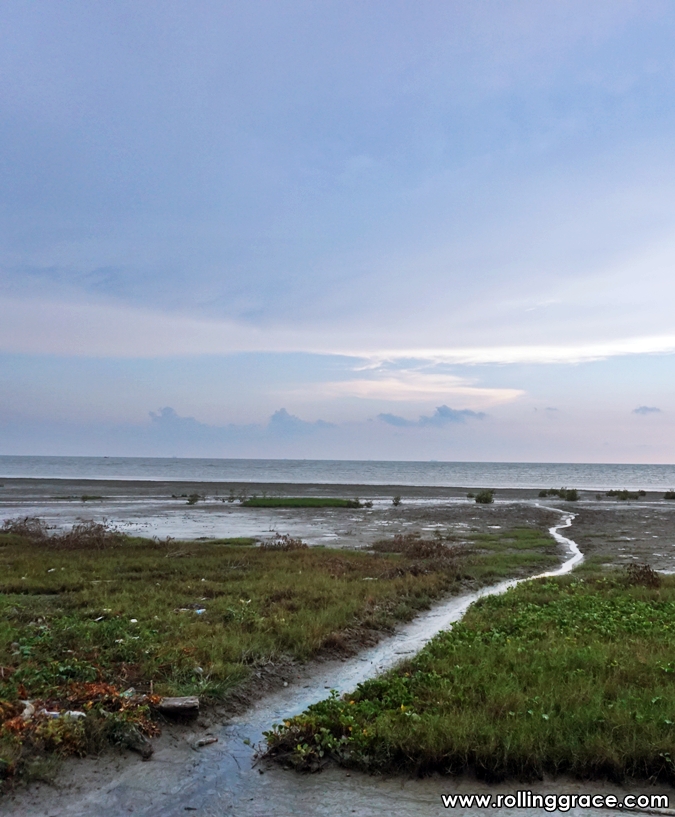
Along Kedah’s northern coastline, where Sungai Muda meets the Strait of Malacca, the land lies low and unprotected. Fishing boats rest on sand only metres from the water. Houses sit close to the shore, built for daily access to the sea that sustains the village.
On 26 December 2004, that same sea withdrew without warning. The shoreline stretched outward, exposing mud and seabed. Minutes later, water returned with force. The first surge rolled across the flats and into the village. A second wave followed, higher and faster, driving boats inland and breaking through concrete walls.
Today, the Tsunami Memorial within the Dataran Tsunami Kota Kuala Muda stands on this ground. The horizon appears calm. The tide moves gently. Yet the open landscape makes it possible to imagine how quickly water travelled here, and how little stood in its way.
Read also: The 2,000-Year-Old Sungai Batu Archaeological Site in Kedah
What Happened in Kota Kuala Muda in 2004
The tsunami reached Kota Kuala Muda at approximately 1.15pm Malaysian time. Witnesses reported the sea receding unusually far from the shoreline before the first wave arrived. The initial surge measured around 2.5 metres. A second wave followed roughly thirty minutes later, reaching heights of up to eight metres.
In Kedah, 11 lives were lost. Nationwide, Malaysia recorded 68 fatalities. Ten villages in the Kota Kuala Muda area were severely affected. A total of 113 houses were destroyed and 398 were damaged. Families from 477 homes were forced to evacuate.
Unlike countries closer to the epicentre, Malaysia was not directly above the seismic rupture zone. Yet the western coastline, particularly Kedah and Penang, still absorbed destructive wave energy funnelled through the Andaman Sea.
Dataran Tsunami Kota Kuala Muda today stands where water once surged inland.
What to See at Kota Kuala Muda Tsunami Memorial
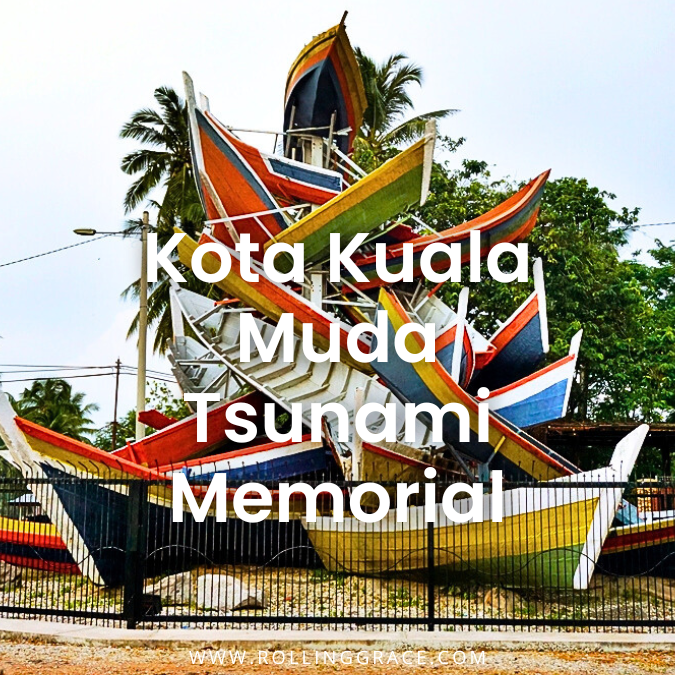
Tugu Sampan Tsunami Kuala Muda 2004
The most visible structure at the site is a six-metre-high installation composed of 26 fishing boats stacked vertically. Each boat was damaged during the tsunami. Their original paint remains visible in layers of blue, red and yellow.
The number 26 marks the date of the disaster, 26 December 2004.
From a distance, the monument rises abruptly against the low horizon. Up close, the chipped paint and warped hulls reveal their previous function. These were working boats belonging to local fishermen. Their transformation into a vertical memorial links livelihood directly to loss.
Locally, the monument is known as Tugu Sampan Tsunami Kuala Kedah.

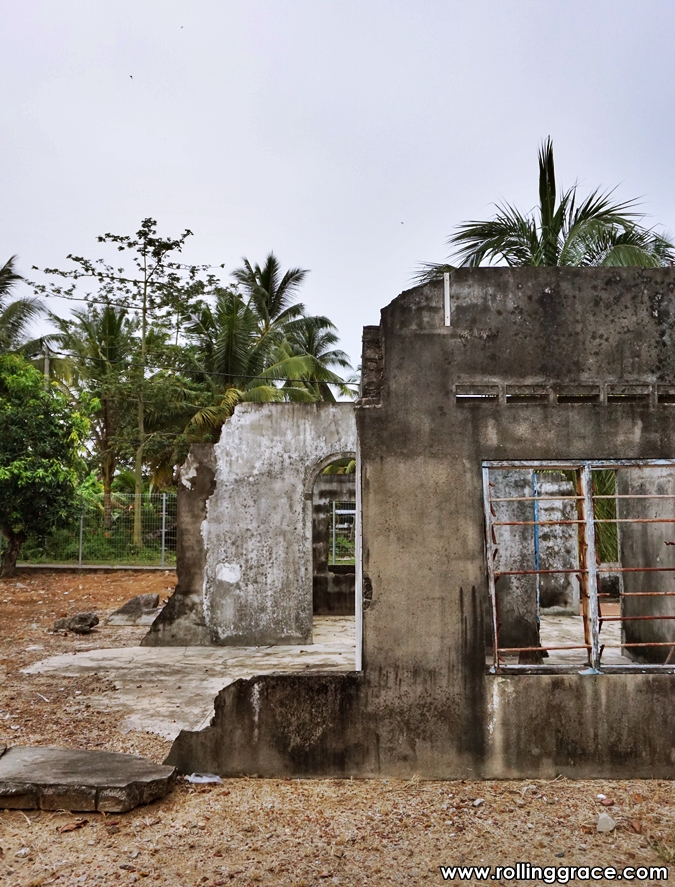
Preserved Destroyed Houses
Several houses remain within the memorial grounds, left in the condition the water forced upon them. Concrete walls are split. Timber beams angle outward. Floors slope where foundations shifted under pressure.
These are original homes. They were not rebuilt or arranged for interpretation. What stands here is what remained after the surge receded.
Walking between them sharpens the sense of distance between sea and settlement. The shoreline feels close. The pattern of collapse reveals how the water entered, how it moved, and where it struck with greatest force.
There are few barriers separating visitor from ruin. The space reads as a residential area halted mid existence, domestic rooms and corridors fixed in the aftermath of a single morning.


Kota Kuala Muda Tsunami Gallery
Adjacent to the open-air grounds is the Tsunami Gallery, managed by the Sungai Petani Municipal Council.
The gallery presents:
- A timeline of the 26 December 2004 earthquake
- Regional maps tracing the wave’s movement
- Statistical records of impact across affected countries
- Archival photographs and documentation
The 2004 Indian Ocean tsunami affected more than 14 countries and claimed close to 230,000 lives globally, making it one of the deadliest natural disasters in recorded history.
Some images within the gallery are graphic. Visitors should be prepared for sensitive material.
The gallery contextualises what the outdoor site demonstrates physically. Together, they form a complete account: data and evidence, narrative and terrain.
Why Visit Dataran Tsunami Kota Kuala Muda
As an attraction in Kedah, Kota Kuala Muda Tsunami Memorial introduces a different dimension of travel. It is not leisure oriented in the conventional sense. There are no immersive galleries or retail facilities shaping the visit. The setting remains largely open, anchored by the coastline and the remnants that were left behind.
The site preserves physical memory. Fishing boats displaced by the surge reflect the economic base of the village, where small scale fisheries once defined daily life. Damaged houses, left in their fractured state, illustrate the exposure of low lying coastal settlements when confronted with sudden force. The shoreline stretches uninterrupted, making clear how near homes once stood to open water.
Here, geography becomes central to understanding. The relationship between sea and settlement is visible within a single line of sight. Distance, elevation and exposure explain more than any plaque could. The memorial invites visitors to read the land itself as record.
Coastal Geography and Environmental Awareness
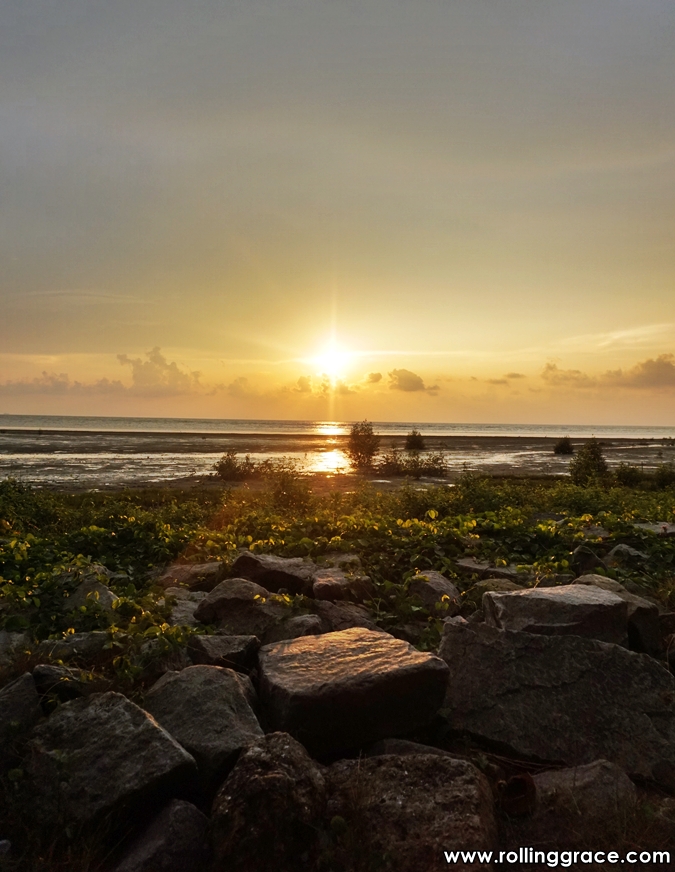
Kota Kuala Muda sits near the estuary of Sungai Muda, an area characterised by tidal flats and mangrove ecosystems. Mangroves are now widely recognised as natural coastal buffers capable of reducing wave energy during storm surges and extreme events.
Following the 2004 disaster, coastal resilience became a regional priority. Malaysia strengthened its seismic monitoring network and integrated tsunami early warning systems into national emergency response protocols. Coastal sirens and evacuation procedures were introduced in vulnerable areas.
Dataran Tsunami Kota Kuala Muda therefore exists within a broader conversation about environmental planning and disaster preparedness. It is not only a site of remembrance but also a reminder of how coastal management intersects with community safety.
As sea levels rise and extreme weather events increase globally, these considerations remain relevant.
Useful Tips for Visitors
Address: Dataran Tsunami Kota Kuala Muda, Kampung Kepala Jalan, 08500 Kota Kuala Muda, Kedah Darul Aman
Opening Hours: 8.30am to 6.00pm daily
Admission: Free
The grounds are largely unshaded. Midday heat can be intense, particularly during dry months. Morning or late afternoon visits are advisable. Comfortable footwear is recommended, as some areas around preserved houses are uneven.
There are limited commercial facilities on site. Visitors often combine a trip here with stops in Sungai Petani or nearby coastal areas.

Unique Attraction in Kedah
Dataran Tsunami Kota Kuala Muda does not resemble the heritage complexes found in city centres. There are no curated galleries leading visitors through a chronological storyline, no immersive projections, no reconstructed facades. What stands here is the original ground that absorbed the force of the 2004 tsunami.
The monument rises from a flat coastal plain that remains largely unchanged. Damaged houses are not replicas but actual structures left in place. Their walls are cracked at the same angles where water struck. Foundations remain uneven. The distance between shoreline and settlement is visible in a single glance.
Beyond the memorial grounds, the village continues. Padi fields stretch inland. Fishing boats are pulled ashore after morning trips. Nets are repaired in open yards. The sea that once surged inland is again part of daily routine.
This coexistence between memory and normalcy is what makes the site distinct. Dataran Tsunami Kota Kuala Muda does not isolate tragedy from its setting. It sits within a working coastal community that rebuilt and carried on, without erasing what happened on this shoreline.
For those travelling through Kedah, Dataran Tsunami Kota Kuala Muda offers insight into a lesser-discussed chapter of Malaysia’s recent history. While Langkawi and Alor Setar draw most tourism attention, Kota Kuala Muda provides an opportunity to engage with coastal heritage beyond beaches and food.
It also reinforces the importance of respectful visitation. The site commemorates real loss within a small fishing community. Observing quietly, avoiding intrusive photography near preserved homes, and treating the grounds with care maintains the integrity of the space.
Love stories like this? Subscribe to the Rolling Grace newsletter for thoughtful travel notes, hidden dining gems, and slow discoveries from across Asia.
Leave a Reply