Bali does not eat like the rest of Indonesia. The island is Hindu in a country that is predominantly Muslim, and that distinction shapes everything on the plate. Ceremonial spice pastes are a daily standard and dishes that exist nowhere else in the archipelago turn up at roadside warungs as a matter of routine.
This guide is based on multiple visits to Bali across different years, eating across warungs, markets, and restaurants from Ubud to Seminyak to Candidasa. These are the ten must try dishes in Bali worth knowing before you go.
Read also: Nyepi Day in Bali: 9 Reasons to Experience the Day of Silence
Nasi Campur
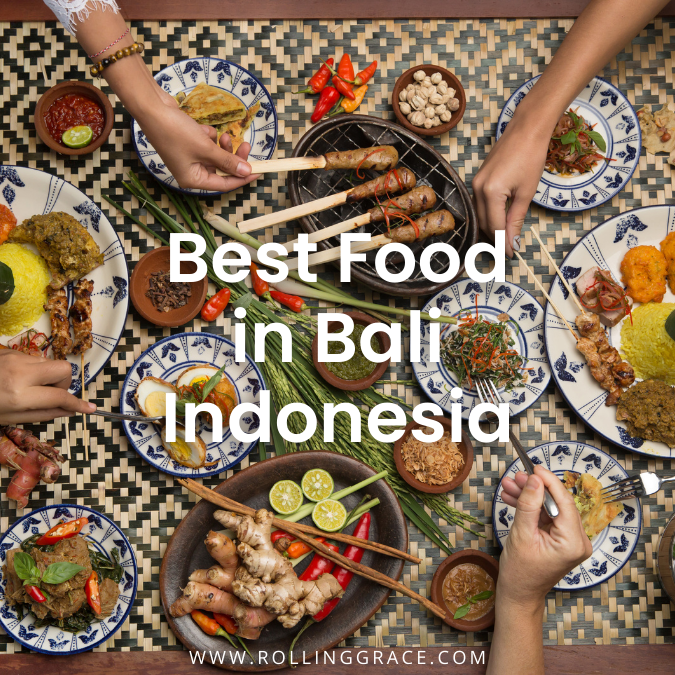
A mound of steamed white rice arrives at the centre of the plate, surrounded by small portions of whatever the warung is preparing that day: shredded spiced meat, a scoop of lawar, tempe, tofu, a boiled egg, keropok, sambal. There is no fixed composition. The plate changes depending on where you eat it and what has been cooked that morning.
Read more: Nasi Campur in Indonesia: 4 Facts On This Culinary Classic
At a good warung, nasi campur is a compact cross-section of the Balinese kitchen, six or seven rotating components, at least one of which will be something house-made that does not appear on a written menu anywhere. It is also one of the most affordable ways to eat well on the island.
The warungs that do this well have been refining their daily rotation for years. It is one of the must try dishes in Bali worth trying during a visit.

Sate Lilit Bali
Most Indonesian satay involves cubed or sliced meat pushed onto a skewer. Sate lilit works differently. Minced fish, pork, or chicken is blended with grated coconut, coconut milk, kaffir lime leaves, shallots, and a layered spice mixture, then pressed thickly around a stalk of lemongrass or sugarcane and grilled over charcoal. The name means “to wrap around,” which describes the method exactly.
The lemongrass skewer perfumes the meat from the inside as it cooks. The coconut adds a slight sweetness and a density that standard satay does not have. It appears at street stalls, at ceremonial spreads, and at most restaurants that take Balinese cooking seriously.
At a good warung, the mixture will be freshly ground that morning. At a lesser one, it will taste of little beyond smoke. The difference is immediately apparent. It stands among the must try dishes in Bali for travellers.

Ayam and Bebek Betutu
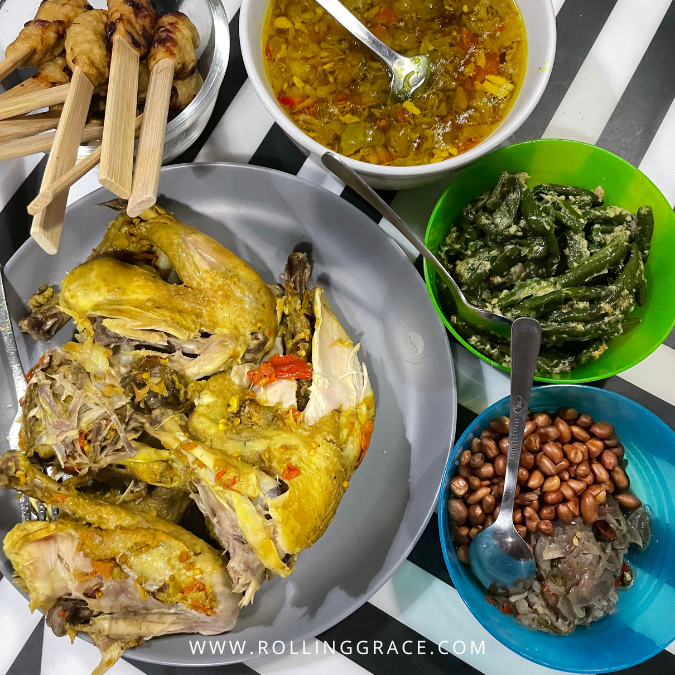
Betutu is a cooking method before it is a dish. Chicken (ayam) or duck (bebek) is coated in bumbu betutu, a paste built from ginger, turmeric, shrimp paste, chilli, galangal, and black pepper, then wrapped in banana leaves and slow-cooked for several hours, either steamed or roasted over low heat. The result is meat that has absorbed every layer of the spice paste, with a depth of flavour that quick preparations cannot replicate.
Bebek betutu is the more celebratory version. Duck takes longer to break down and carries more flavour through the process. A properly made bebek betutu, served whole, is a serious undertaking. In Ubud and Seminyak, several restaurants offer whole duck betutu as a centrepiece dish that requires advance ordering. At warungs, ayam betutu with rice is a straightforward and dependable lunch. Both are worth eating.
Babi Guling
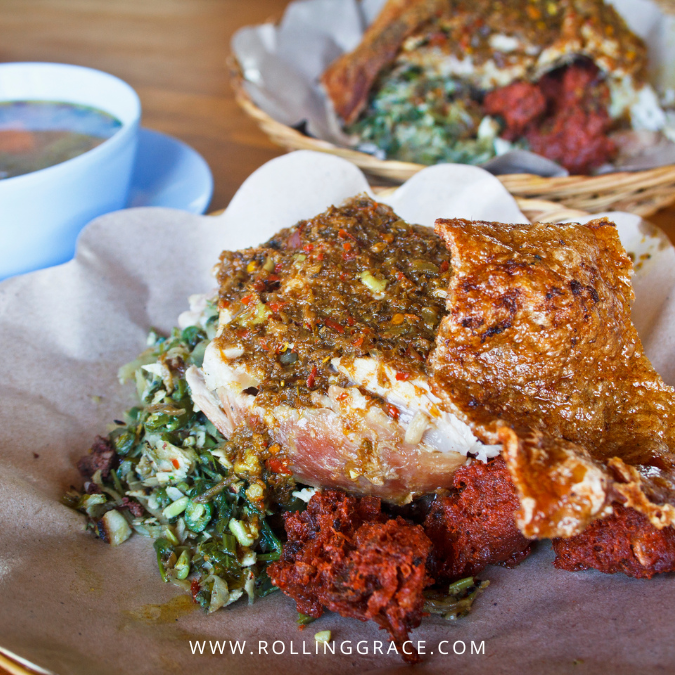
Babi guling is the most distinctly Balinese thing you can eat. Meat is rubbed inside and out with a paste of turmeric, coriander seeds, lemongrass, galangal, garlic, and ginger, then slow-roasted over an open fire until the skin blisters and cracks and the meat pulls cleanly from the bone. The preparation has ceremonial origins, traditionally made for temple feasts and community offerings, but it now appears at dedicated warungs across the island, served from the morning until it sells out.
A plate arrives as a composition: sliced meat, a section of crispy skin, a scoop of lawar, rice, and sate. The skin is the part most people order around. At Ibu Oka in Ubud, one of the longest-standing babi guling operations on the island, the queue forms before the doors open and the pork is usually finished by early afternoon.
Other strong options include Warung Babi Guling Pak Malen in Seminyak and Pak Dobiel, both of which have consistent local reputations. Arrive early. This is not a dish that keeps.
Lawar
Lawar rarely travels beyond Bali, which makes it one of the more interesting things to seek out. It is a mixture of finely chopped vegetables, typically long beans, young jackfruit, or green papaya depending on the version, combined with grated coconut, minced meat, and a spice paste that includes galangal, shallots, chilli, and kencur (lesser galangal). In traditional preparations, fresh blood is added to bind the mixture.
There are two broad versions: red lawar includes the blood; white lawar does not. Pork lawar and chicken lawar are most common, with duck versions appearing at ceremonial spreads. It is eaten as a component within nasi campur and babi guling plates, but ordering it as a standalone dish at a warung that prepares it well is worth doing.
The flavour is sharp, slightly bitter from the raw vegetables, and grounded by the coconut. It is one of the must try dishes in Bali known for its flavours.

Sambal Matah
Sambal matah is Bali’s defining condiment and one of the few Balinese preparations that has successfully migrated to restaurant menus across Southeast Asia. Unlike most Indonesian sambals, it is not cooked. Thinly sliced shallots, lemongrass, bird’s eye chilli, kaffir lime leaves, and a small amount of shrimp paste are mixed together and dressed with coconut oil and fresh lime juice. Nothing is ground or blended. Everything stays in visible, distinct pieces.
The texture is crunchier than standard sambal. The flavour is aromatic and sharp before it is hot, with the lemongrass and kaffir lime doing most of the work. It goes alongside grilled fish, ayam betutu, sate, and most things that come off a charcoal grill. At a proper Balinese warung it will already be on the table. If it is not, ask.

Gado-Gado
Gado-gado belongs to the broader Indonesian kitchen rather than exclusively to Bali, but it appears consistently across the island and is more variable in quality than most visitors expect. Blanched vegetables, long beans, carrot, potato, bean sprouts, are plated alongside raw cucumber and tomato, boiled egg, rice cake, tempe, and tofu, then dressed with peanut sauce made from ground roasted peanuts, palm sugar, tamarind, and chilli.
The peanut sauce determines everything. At a poor version, it is thin, sweet, and flat. At a good one, it is thick, slightly salted, and lifted by enough tamarind to cut through the richness. The dish is served warm or at room temperature. It is also one of the more reliable options for vegetarians on an island where the most celebrated dishes are built around pork. It remains one of the must try dishes in Bali for those visiting the island.

Ayam Penyet
Ayam penyet has roots in East Javanese cooking but is found throughout Bali at casual rice-plate restaurants. The process is specific: meat is first poached in a yellow spice broth built from turmeric, candlenut, galangal, and lemongrass, then deep-fried until the exterior is crisp, then pressed flat against a stone mortar to break up the fibres and soften the interior. The pressing step is what separates it from standard fried chicken.
It arrives with rice, sliced raw cucumber, and a sambal that contains tamarind, shrimp paste, and chilli in quantities that are not decorative. The combination of the fried crust, the tender pressed meat, and the heat of the sambal is direct and effective. A well-made version is difficult to fault.

Klepon
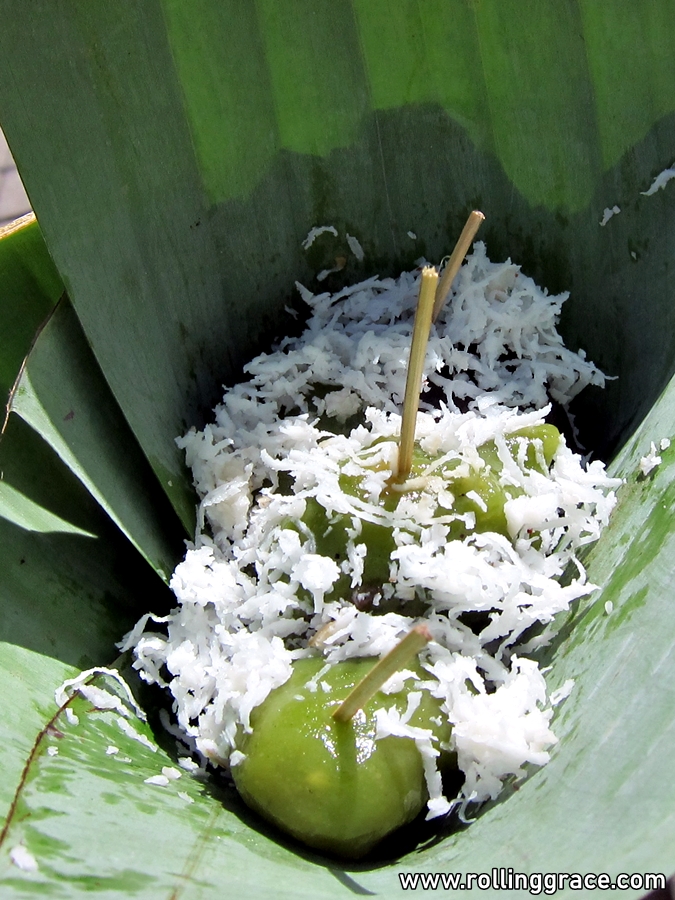
Klepon are glutinous rice balls the size of a large grape, coloured green from fresh pandan juice, and filled with a core of palm sugar. They are rolled in freshly grated coconut and served at room temperature. When you bite through the rice skin, the palm sugar has melted into a liquid centre that runs immediately. The contrast between the chewy exterior, the coconut coating, and the fluid sweetness inside is the point of the dish.
They are a jajanan pasar, a market snack, made fresh throughout the day. You will find them in trays at traditional markets, at roadside carts, and at pasar malam across the island. The ones made that morning are noticeably better than those made the previous day: the skin tightens as it sits and the sugar begins to solidify. Buy fresh.

Rijsttafel
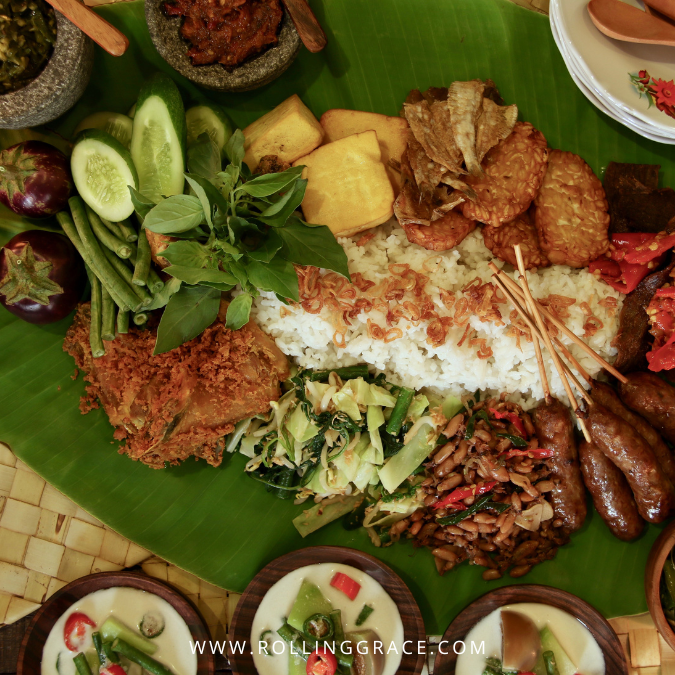
Rijsttafel, Dutch for “rice table,” is a colonial-era format that has survived in Bali as a legitimate way to eat. A central portion of rice is surrounded by anywhere from eight to forty small dishes: grilled meats, sate lilit, lawar, tempe, tofu, sambal, keropok, vegetable preparations. The format was developed by Dutch colonists as a way to eat across the full range of Indonesian cooking in a single sitting and has since been absorbed into the local restaurant vocabulary without much ceremony.
In Bali, rijsttafel is a sharing format, typically served for two or more. The higher-end versions at restaurants in Ubud run to twenty or more dishes; the warung versions are elevated nasi campur by another name.
Either way, it is the most efficient way to get a broad read on Balinese cooking in one sitting, and for a first visit to the island, a reasonable place to start. It is one of the must try dishes in Bali for visitors exploring local cuisine.
Tips for Visitors
Most of the dishes on this list are available at warungs across Bali for well under 50,000 IDR per plate. Babi guling is the exception: a full plate at a dedicated warung will run higher, and the better-known spots in Ubud charge tourist prices.
For betutu, whole duck preparations at restaurants in Ubud generally require advance notice of at least a few hours. Markets open early and most fresh snack items, including klepon, are at their best before noon.
Frequently Asked Questions
- What is the most traditional dish in Bali? Babi guling is widely regarded as the most distinctly Balinese dish, with ceremonial roots and a preparation specific to the island.
- Is Balinese food spicy? Most Balinese dishes are moderately to heavily spiced. Sambal matah and ayam penyet carry the most heat. Klepon and rijsttafel are mild.
- Can vegetarians eat well in Bali? Gado-gado, klepon, and the tempe and tofu components within nasi campur are vegetarian-friendly. Many dishes include shrimp paste, so it is worth asking. Ubud has the highest concentration of vegetarian and plant-based restaurants on the island.
- Where is the best babi guling in Bali? Ibu Oka in Ubud is the most referenced. Warung Babi Guling Pak Malen in Seminyak also has a strong local reputation. Both sell out by early afternoon, so arrive before noon.
- What is bumbu betutu? The spice paste used in betutu cooking. It typically includes ginger, turmeric, shrimp paste, chilli, galangal, and black pepper, and is applied to poultry before several hours of slow cooking.
Discovering Must Try Dishes in Bali
Balinese warungs operate on minimal food waste by design. Daily prep, component-based service, and whole-animal cooking leave little to discard.
Eating at locally run warungs rather than hotel restaurants puts money directly into the family-owned food operations that form the backbone of daily food culture on the island.
Love stories like this? Subscribe to the Rolling Grace newsletter for thoughtful travel notes, hidden dining gems, and slow discoveries from across Asia.
Leave a Reply