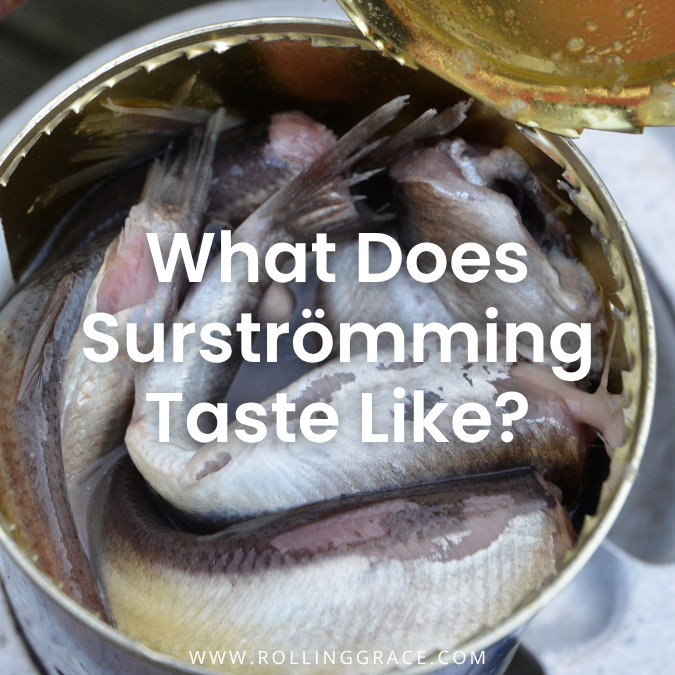
So exactly what is Surströmming? Start here: it is not rotten fish, and that distinction matters to every Swede who has ever watched a foreigner gag through a YouTube challenge and miss the point entirely.
Surströmming is fermented Baltic herring, a traditional delicacy from northern Sweden with roots going back to the 16th century. The word breaks down simply: sur means sour, strömming means Baltic herring.
The result is a lightly salted, carefully fermented fish sold in bulging tin cans, with an aroma that has been measured by Japanese researchers as among the strongest of any food in the world. It is stronger than Korean hongeo-hoe, stronger than Icelandic hákarl, stronger than almost anything else a person might reasonably put on a piece of bread.
The Swedes eat it anyway, outdoors, in late August, with cold beer and good company. For many in northern Sweden, the annual surströmming gathering is more significant than Christmas.
Read also: Top 10 Traditional Balkan Food to Try in Southeast Europe
The History of Surströmming
The most widely repeated origin story places surströmming in the 16th century, when Swedish sailors ran low on salt and could only lightly brine their catch of Baltic herring. According to the legend, they sold a barrel at a Finnish port. The following year, when they returned, the Finns were asking for more. The sailors tried the fermented fish themselves, found it acceptable, and a tradition was born.
The more prosaic explanation is economic. Salt was expensive. Fermenting fish in a weak brine was cheaper than preserving it properly, and it worked. Over time, what began as a cost-cutting measure became a food culture. Surströmming was first mentioned in written records in 1544, when King Gustav Vasa demanded taxes from northern fishermen be paid in barrels of preserved herring.
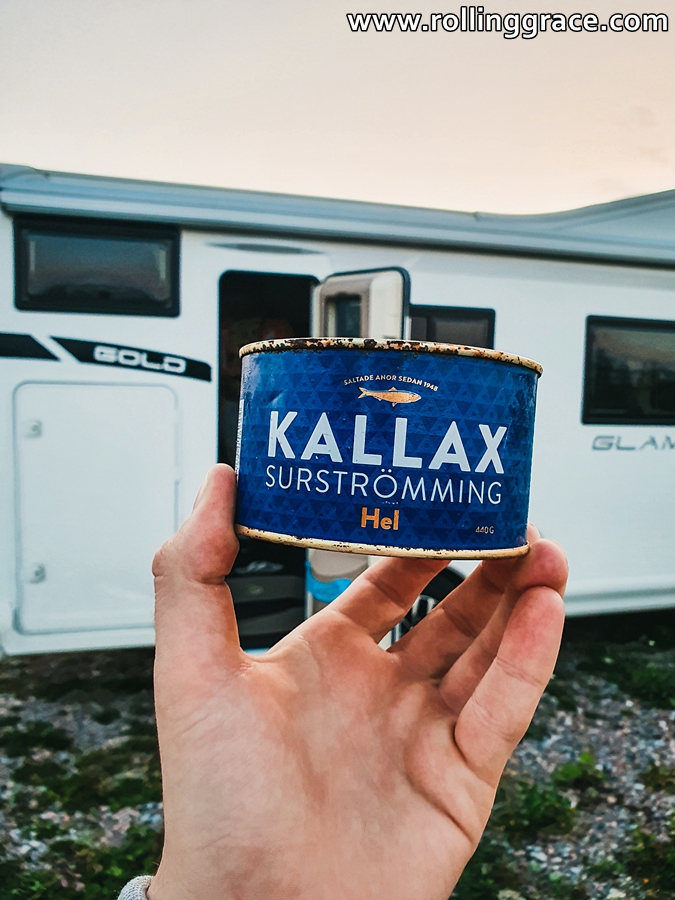
For centuries the fish was stored and served from wooden barrels. Canning, introduced in the 19th century, made it commercially viable and allowed the product to travel further south within Sweden. It also created the distinctive bulging tin that has since become surströmming’s most recognisable feature.
In the late 1940s, Swedish producers lobbied for a royal ordinance to prevent incompletely fermented fish from being sold. The resulting decree forbade sales before the third Thursday of August each year. The ordinance is no longer in force, but Swedish retailers still observe the date as the official annual premiere, known as surströmmingspremiär. Most surströmming is consumed between late August and early September.
How Surströmming Is Made
The process has remained largely unchanged for centuries, though the wooden barrels have given way to modern facilities.
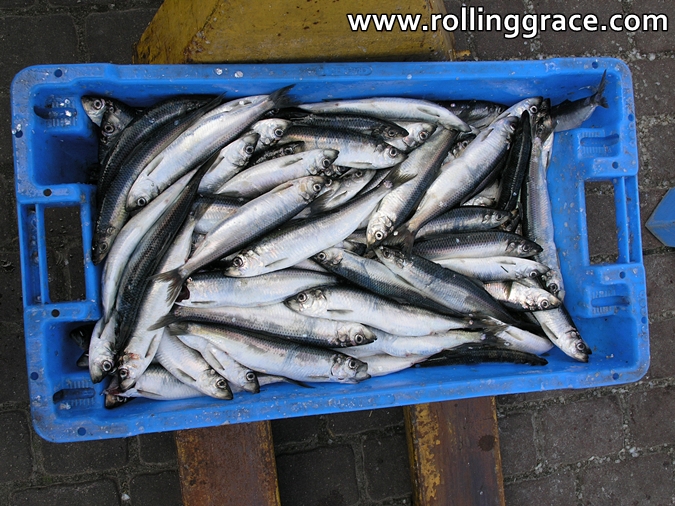
Herring are caught in spring, typically between April and June, when the fish are in prime condition and approaching spawning. They are placed in a strong brine for approximately 20 hours to draw out the blood. The heads and innards are then removed, and the fish are transferred to a weaker brine solution in barrels, where they ferment for roughly six to eight weeks.
The partially fermented herring are then sealed into tin cans, where fermentation continues. The process is driven by a lactic acid enzyme in the fish’s spine, which works alongside Halanaerobium bacteria to break down the fish’s glycogen into organic acids. The result is a range of intensely pungent compounds: propionic acid, butyric acid, acetic acid and hydrogen sulphide. The hydrogen sulphide is largely responsible for the rotten-egg quality of the smell. The salt keeps rotting bacteria at bay while allowing fermentation to proceed.
After approximately six months, the cans begin to bulge from the build-up of fermentation gases. This is the indicator that they are ready. The optimal maturation window is generally considered to be between six and twelve months after canning.
Because surströmming is made from Baltic Sea herring, it contains higher levels of dioxins and PCBs than EU regulations typically permit. Sweden was granted exceptions from 2002 to 2011 and applied for renewal. Producers have noted that if the exceptions were denied, they would be limited to using herring under 17 centimetres, which would significantly reduce production volumes.
What Does Surströmming Smell Like?
Strong is an understatement. A 2002 Japanese study ranked surströmming as the world’s most pungent food, surpassing Korean fermented skate. German food writer Wolfgang Fassbender observed that the greatest challenge of eating surströmming is trying not to vomit before the first bite rather than after.
The smell comes from the fermentation compounds listed above: butyric acid (similar to rancid butter), propionic acid (sharp and slightly cheesy) and hydrogen sulphide (rotten egg). When a can is opened, the odour can linger for hours. Opening indoors is widely considered a social transgression. Many open the can submerged in a bucket of water, or angle it away from the table before puncturing, to manage the initial pressure release.
The smell diminishes once the can has been open for a few minutes. Experienced surströmming eaters report that the taste is considerably more nuanced than the aroma suggests: salty, acidic, with a rich umami depth that converts a notable percentage of first-time tasters.
How to Eat Surströmming
The traditional preparation is surströmmingsklämma: a sandwich made with buttered tunnbröd (a thin, slightly sweetened Swedish flatbread), sliced almond potatoes, diced red onion and the fermented herring fillets. In northern Sweden, this is the standard. In the south, variations include crème fraîche or gräddfil (a fat-fermented sour cream similar to smetana), chives, tomato and chopped dill.
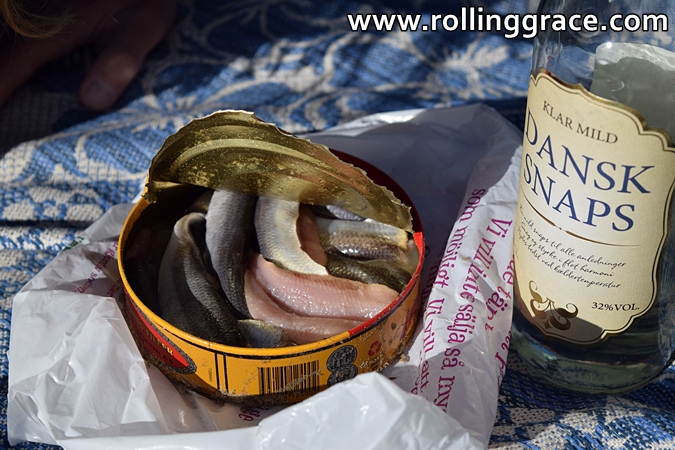
Accompaniments vary by region and personal conviction. Cold beer, pilsner, lager and snaps (aquavit) are all considered appropriate. Some argue for cold milk as a palate companion. The debate among connoisseurs on the correct drink is unresolved and possibly unresolvable.
Surströmming is usually the centrepiece of a surströmmingsskiva, a traditional outdoor gathering built around the opening of the season. These events are social occasions as much as meals. The correct setting is outdoors. The correct attitude is ceremonial.

Where to Buy Surströmming
In Sweden, surströmming is available in most grocery stores during the season, which runs from the third Thursday of August through early September. Established brands include Oskars and Röda Ulven. Outside Sweden, it can be purchased through Scandinavian specialty food shops and international online retailers, though shipping times from Sweden can take up to 30 days.
Most airlines have banned surströmming from cabin baggage due to its odour and the risk of pressurised cans bursting at altitude. It is classified as a hazardous material for air transport.
For readers in Malaysia
Surströmming is available on Shopee and through specialty importers. Prices vary; at time of writing, cans have been listed at approximately RM170 per unit.
Confirm current availability and pricing with the seller before ordering, as stock is seasonal and supply from Sweden has tightened in recent years due to declining Baltic herring catches.
The Declining Herring Supply
As of 2023, Baltic herring stocks have dropped sharply. Overfishing since the Middle Ages has pushed populations toward collapse, and in recent seasons Swedish retailers have sold out their entire surströmming supply within minutes of the annual premiere. The number of active producers has fallen to around ten larger commercial operations alongside a small number of artisan producers, including Roland Stenman of Huvö Surströmming, who continues the tradition from his family’s boathouse on Storön in the Kalix archipelago.
There are cautious signs of recovery in the herring population, but the supply situation remains fragile. Buying surströmming from traditional producers, where possible, supports the continuation of a food culture that has survived since the 16th century.
Is Surströmming Safe to Eat?
Yes. The fermentation process creates an acidic environment that prevents harmful bacterial growth. Properly produced surströmming, consumed before its expiration date and from an undamaged can, is safe. The dioxin and PCB levels are a regulatory issue specific to EU food safety standards and have been managed through Sweden’s ongoing exception applications.
The YouTube challenge videos that made surströmming internationally famous have also, frequently, misrepresented how the food is actually eaten. Opening a can indoors, without bread, potatoes or accompaniments, and reacting to the smell alone is not the traditional experience. It is the equivalent of judging durian by sniffing an unopened one in a taxi.
Frequently Asked Questions on What Is Surströmming
- What is surströmming? Surströmming is a traditional Swedish delicacy made from fermented Baltic herring. The name translates to “sour herring.” It originates from northern Sweden and has been eaten since at least the 16th century. It is best known internationally for its extremely strong smell.
- Why does surströmming smell so bad? The smell comes from fermentation compounds produced during the months-long curing process, including hydrogen sulphide, butyric acid and propionic acid. These compounds give the fish its characteristic rotten-egg and rancid-butter aroma. The smell is strongest when the can is first opened and diminishes once the fish is exposed to air.
- What does surströmming taste like? Despite the smell, the taste is described by enthusiasts as salty, acidic and rich in umami. Many people who try it correctly, with bread, potatoes and accompaniments, find it considerably more pleasant than the aroma suggests.
- How do you eat surströmming? The traditional method is a sandwich called surströmmingsklämma: buttered tunnbröd (Swedish flatbread), sliced almond potatoes, diced red onion and the herring fillets. It is always eaten outdoors. Cold beer, snaps or milk are the standard accompaniments.
- Is surströmming safe to eat? Yes. The fermentation process prevents harmful bacterial growth. Eat it before the expiration date and ensure the can is undamaged.
- Can you buy surströmming in Malaysia? Yes, surströmming is available in Malaysia through Shopee and specialty importers. Prices are approximately RM170 per can. Confirm current availability before ordering as stock is seasonal.
- Why are surströmming cans banned on planes? Most airlines ban surströmming due to the strong odour and the risk of pressurised cans bursting at high altitudes. It is classified as hazardous material for air transport.
Baltic herring stocks have fallen sharply in recent years due to centuries of overfishing. Supply is limited and producers are few. Where possible, buying from traditional artisan producers supports both the food culture and the fishing communities of northern Sweden that have sustained it for over 400 years.
Rolling Grace covers food, travel and culture across Asia. For more on food experiences worth seeking out, visit https://rollinggrace.com/category/food/
Love stories like this? Subscribe to the Rolling Grace newsletter for thoughtful travel notes, hidden dining gems, and slow discoveries from across Asia.
Leave a Reply