In Guilin, the day starts with noodles. Before the karst peaks have lifted out of the morning mist and before the boats have set off down the Li River, the city is already eating, hunched over plastic stools in roadside shops, ladling pickled vegetables into bowls of slick white noodles, chasing each mouthful with chilli oil and a splash of pork broth.
This is Guilin Rice Noodles or Guilin Mifen, the dish that has fed this corner of southern China for more than 2,000 years and remains, by a considerable margin, the best food in Guangxi province.
Read also: What to Eat in Chengdu: 8 Great Dishes To Try in Sichuan

What Are Guilin Rice Noodles?
Guilin Rice Noodles are a regional speciality of Guangxi province, made from rice flour and water pressed into thin, smooth, slightly chewy strands. The noodles themselves are deliberately plain, a neutral base for the broth and toppings that define each shop’s version of the dish.
They come in two basic shapes, round or flat, and three standard portion sizes: small, medium and large, ordered in Mandarin as yi liang, er liang or san liang.
Book Guilin Longji Terraces Full-Day Tour with Local Food
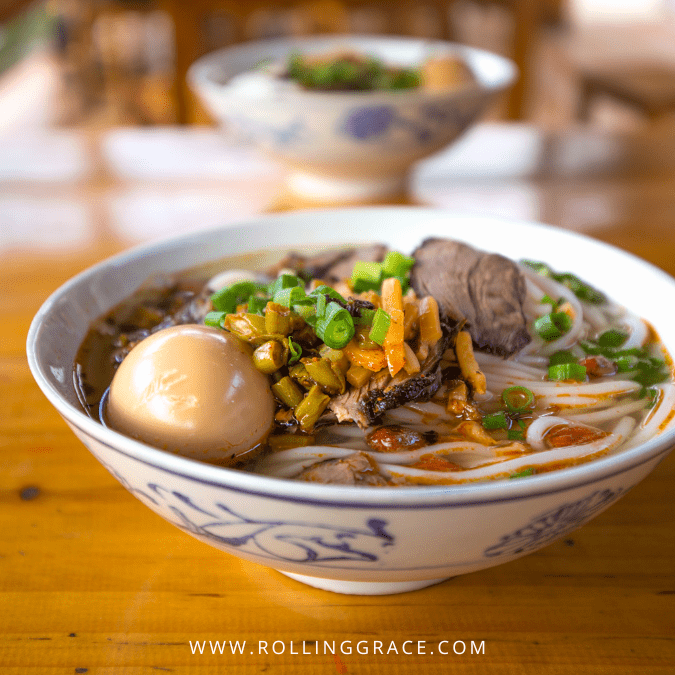
What separates Guilin Mifen from other Chinese rice noodle dishes is the broth and the topping bar. The broth is slow-boiled for hours with cinnamon sticks, ginger, dried tangerine peel, bones and meat, producing a clear, deeply savoury base that is mild on its own but designed to be customised.The topping bar at every shop is where the dish becomes itself.
History of Guilin Rice Noodles
The origins of Guilin Rice Noodles are commonly traced to the Qin Dynasty and the soldiers building the Lingqu Canal, who reportedly needed a portable, durable food source adapted from the wheat noodles of the north.
Rice grew abundantly in Guangxi where wheat did not, so the soldiers and the local cooks who fed them began producing noodles from rice flour. The dish stayed, evolved and spread, becoming the cornerstone of the Guilin breakfast and street food culture that exists today.
The dish travels poorly. It is found in its truest form only here, in the alleys and morning markets of Guilin and the smaller towns along the river. Knowing what to order, how to top it and where to eat it is the difference between a meal and an introduction to a regional cuisine that has shaped Chinese eating well beyond its provincial borders.
7 Things to Know Before You Try
Portion sizes are non-negotiable
Order by weight in liang. Yi liang is small, er liang is medium and san liang is large. Point and gesture if your Mandarin is not strong; every shop understands the system. Most first-time visitors order er liang and finish with the bowl half full because the toppings add considerable bulk.
Toppings are typically self-serve
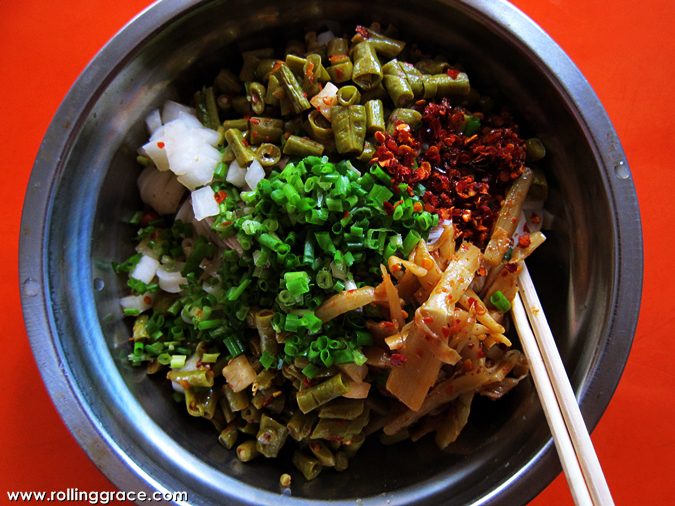
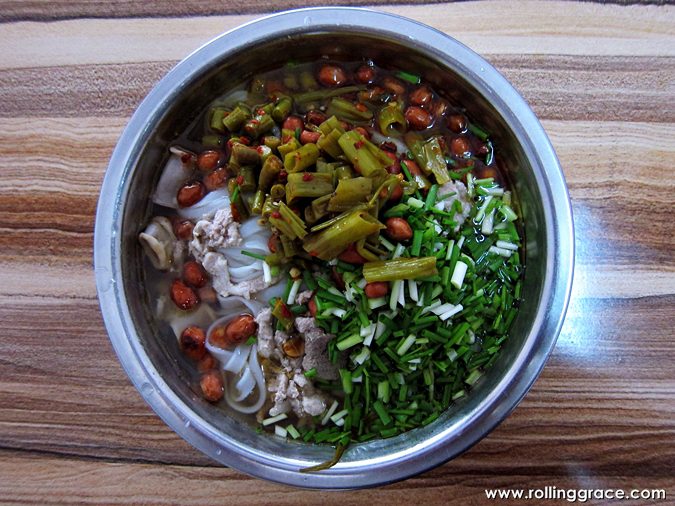
The topping bar runs along one side of the shop, usually in a quieter corner. Sour bamboo shoots, pickled green beans, pickled cabbage, pickled white radish, roasted peanuts, scallions, coriander, dry-toasted chilli flakes and pickled soybeans are standard.
Tips: Add a little of everything on your first visit. Adjust to your preference on the second.

Meat is added at the counter
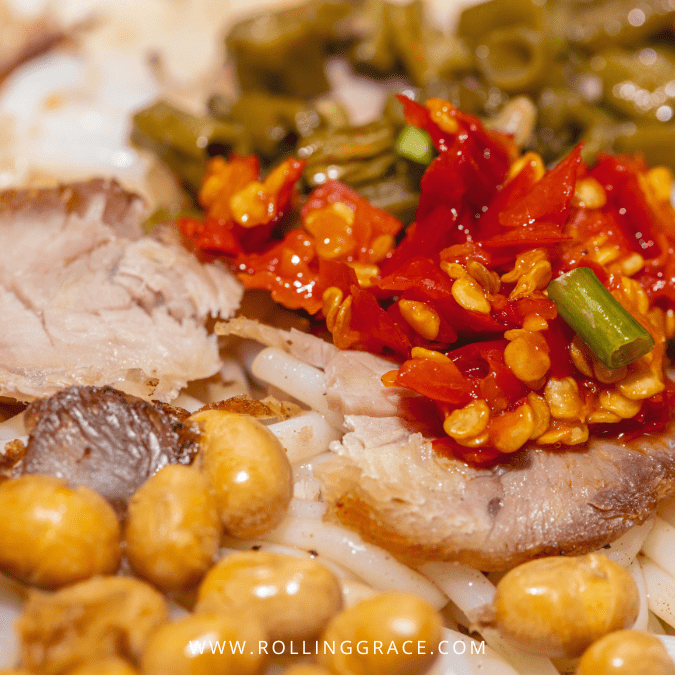
For those who consume meat, sliced marinated pork or beef is laid over the top of the noodles before the broth is added. The meat is usually pre-cooked and marinated in soy, star anise and rock sugar, then sliced thin. You will not be asked how much; the standard portion comes with the bowl.
There are three main styles
Knowing which one you want before stepping up to the counter changes the experience entirely:
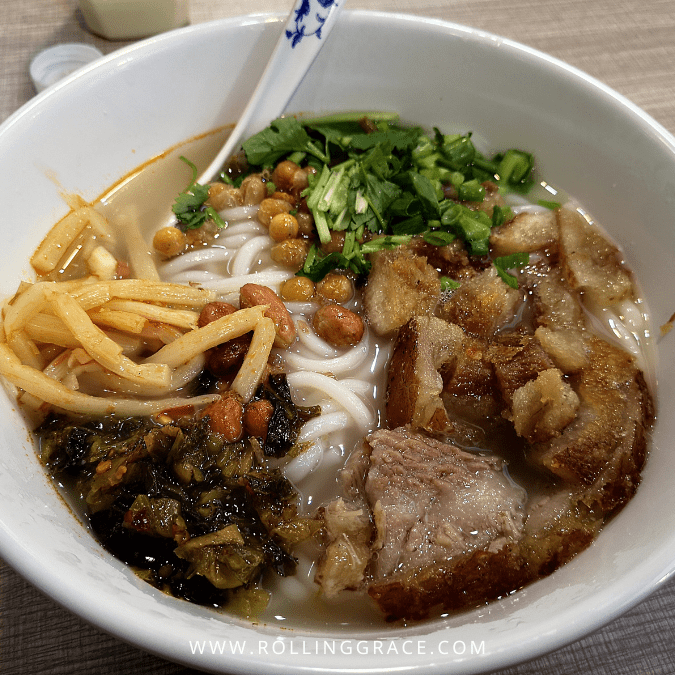
- Lu cai fen (卤菜粉) is the gravy style, the most popular version, pork bone broth poured over the noodles and meat with the toppings added separately.
- Tang cai fen (汤菜粉) is the soup style, where the broth fills the bowl and the noodles sit in it.
- Zhu fen (煮粉) is the boiled style, simpler, with the noodles cooked in the broth directly.
Luosifen is a related but separate dish
Luosifen, made with rice noodles and river snail broth, comes from Liuzhou, another Guangxi city. It is famous for its pungent fermented bamboo shoot aroma and has built a national following in China through instant noodle versions.
It is not Guilin Rice Noodles, but if you are in Guangxi for the cuisine, it deserves its own bowl.
Varying Guilin rice noodles recipes
There is no standardised recipe for Guilin Rice Noodles, which is part of why the dish has stayed alive for two millennia. The broth proportions, the topping selection and the meat marinade vary from shop to shop.
Eating your way through several is the right approach for anyone spending more than a day in Guilin.
A cheaper Chinese street food option
A bowl typically costs under 10 yuan at most street shops, well under USD 2. This is one of the cheapest and most satisfying meals available anywhere in China, and the price has barely shifted in years.
How to Eat Guilin Rice Noodles
Take your bowl from the counter and head to the topping bar before you sit down. Load the toppings according to texture: something crunchy (peanuts), something sour (pickled radish or bamboo), something fresh (scallion and coriander) and something hot (chilli oil or flakes).
Mix everything together at the table before the first bite; the noodles absorb flavour fast and the contrast between the cool toppings and the warm noodles is the whole point. Eat fast. The dish is at its best in the first three minutes.
Where to Find Guilin Rice Noodles
Guilin Rice Noodles are sold on practically every street in the city. The smaller, busier shops with no English menu and a queue out the door are reliably the best.
For a benchmark, Chongshan Rice Noodles (崇善米粉) has been selling traditional Guilin Mifen since 1986 with branches across the city and is widely considered one of the most consistent places to start. From there, follow the locals.
Are Guilin Rice Noodles Healthy? Calories and Dietary Facts
Rice noodles are naturally gluten-free, which makes Guilin Mifen one of the more accessible regional Chinese dishes for travellers with dietary restrictions.
The dish is low in fat, modest in calories and built on carbohydrates, with the protein coming from the meat and peanuts and the vitamins and minerals from the pickled and fresh toppings.
The pork broth carries the sodium load, which is worth knowing for anyone watching salt intake.
Frequently Asked Questions About Guilin Rice Noodles
What are Guilin Rice Noodles?
Guilin Rice Noodles are a regional dish from Guangxi province in southern China, made from rice flour noodles served in a slow-boiled pork bone broth with sliced meat and a self-serve selection of pickled and fresh toppings. They are eaten across the day but most commonly at breakfast.
What is the difference between Guilin Rice Noodles and Luosifen?
Guilin Rice Noodles come from Guilin and are served with a clear, mild pork bone broth. Luosifen comes from Liuzhou and is made with river snail broth, known for its strong fermented bamboo shoot aroma. They are both Guangxi specialities but they are different dishes.
How much do Guilin Rice Noodles cost?
A standard bowl at a Guilin street shop costs under 10 yuan. Larger portions and premium toppings cost slightly more.
Are Guilin Rice Noodles gluten-free?
Yes. The noodles are made from rice flour and water with no wheat content. Some toppings and sauces may contain gluten, so check with the shop if you have a serious intolerance.
Where is the best place to eat Guilin Rice Noodles?
Chongshan Rice Noodles, founded in 1986 and with multiple branches across Guilin, is one of the most consistent and well-known options. For the broader experience, eat at smaller neighbourhood shops with queues of locals.
Can you make Guilin Rice Noodles at home?
The noodles themselves are simple to make from rice flour, water and salt. The broth is harder to replicate without hours of slow cooking and the right balance of cinnamon, ginger, tangerine peel and pork bones. The toppings are easy. The full dish is possible at home but the best version remains a bowl eaten in Guilin.
This guide is compiled from personal dining experiences across China, culinary sources and ethnographic accounts.
Get the good stuff first. Join Rolling Grace for the restaurants worth crossing a city for, the stays worth the upgrade, and the places to go before everyone else. Free, straight to your inbox.
Leave a Reply